
Calorie Deficit & Protein Calculator for Weight Loss (Female Guide)
Use our calorie deficit and protein calculator to lose weight safely. Learn how much protein and how many calories women need for real fat loss results.
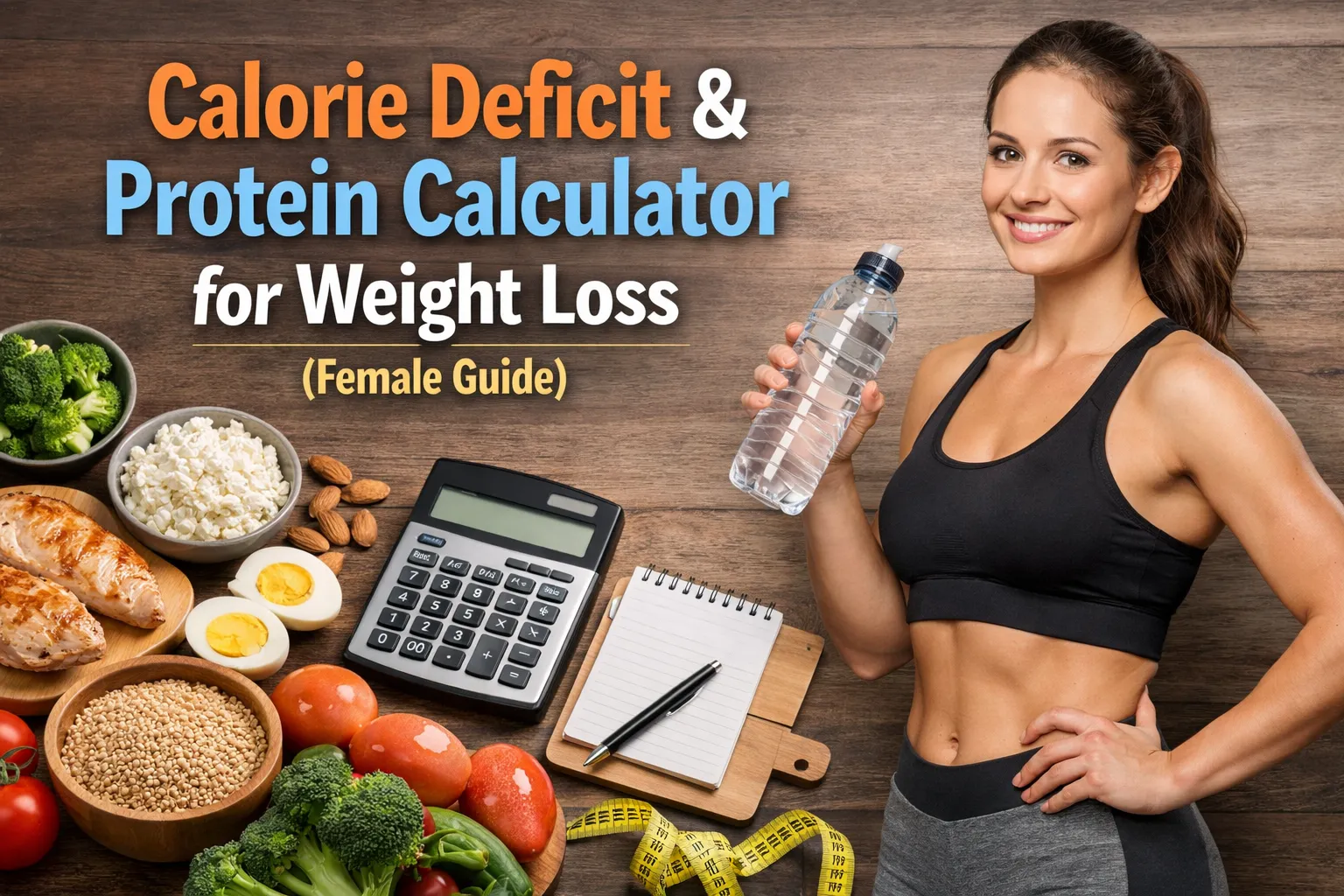
Calorie Deficit & Protein Calculator for Weight Loss: The Complete Guide for Women
This is one of the most common frustrations women face when they start a weight loss journey. The problem is usually not willpower, it is information. Most people either eat too little and lose muscle, or eat too much and wonder why nothing changes.
The solution comes down to two numbers: your calorie deficit and your daily protein intake. Get these two right, and weight loss becomes a lot more predictable and sustainable.
In this guide, you will learn exactly how to calculate both numbers, how to use them together, and how to avoid the most common mistakes that hold women back from real results.
What Is a Calorie Deficit And Why Does It Matter?
Your body burns a certain number of calories every day just to keep you alive, breathing, pumping blood, and digesting food. This is called your Total energy Expenditure. When you eat fewer calories than your TDEE, your body starts using stored fat for energy. That gap between what you eat and what you burn is your calorie deficit.
Why You Cannot Lose Weight Without It
No matter what diet you follow, keto, intermittent fasting, or low-carb, weight loss only happens when you are in a calorie deficit. The diet is just a tool to help you get there. The deficit is the actual mechanism.
Many beginners make the mistake of following a trendy diet without tracking their calories. They feel like they are eating healthy, but they are still eating too much. Healthy food can still have a lot of calories.
Safe vs. Aggressive Deficit
- Mild deficit (250–300 calories/day): Very safe, slow but steady fat loss, low risk of muscle loss
- Moderate deficit (500 calories/day): The sweet spot is roughly 0.5 kg of fat loss per week
- Aggressive deficit (750–1000 calories/day): Faster results, but higher risk of fatigue, nutrient deficiency, and muscle loss
Most nutrition experts recommend a moderate deficit of around 500 calories per day for healthy, sustainable fat loss.
How Many Calories Do You Need to Lose 1 kg Per Week?
The Formula
One kilogram of body fat holds roughly 7,700 calories of stored energy. To lose 1 kg per week, you need to burn 7,700 more calories than you eat over seven days, which works out to a daily deficit of about 1,100 calories.
Here is the simple breakdown:
- 1 kg fat = ~7,700 calories
- 7,700 ÷ 7 days = ~1,100 calorie daily deficit
What Is a More Realistic Goal?
For most women, losing 0.5 kg per week (a 550 calorie daily deficit) is both realistic and sustainable. It is slow enough to preserve muscle, fast enough to see real progress month after month.
From a practical perspective, a 1,100-calorie daily deficit requires either eating very little or exercising a great deal. Very few people can sustain that long-term. Aiming for 0.5 kg/week is smarter and protects your metabolism.

How to Use a Calorie Deficit Calculator
What the Calculator Does
A calorie deficit calculator takes your personal details, age, weight, height, and activity level and estimates your TDEE (Total Daily Energy Expenditure). It then subtracts a safe deficit to give you a daily calorie target for weight loss.
Step-by-Step: How to Use It
- Enter your age, gender (female), height, and current weight
- Select your activity level, be honest. Most people overestimate how active they are
- Choose your weight loss goal (e.g., 0.5 kg/week)
- The calculator shows your daily calorie target
- Use this number to guide your food choices each day
You can try a free and easy-to-use calorie calculator right here: CalculatorsKit Calorie Calculator. Enter your details and get your personalized calorie target in seconds.
Activity Level Guide

In real life, most women with desk jobs are sedentary or lightly active, even if they work out three times a week. Be realistic when selecting your activity level for accurate results.
Why Protein Is Critical for Women Who Want to Lose Fat
Protein Does Three Things Simultaneously
When you are in a calorie deficit, your body is looking for energy. Without enough protein, it will break down muscle tissue, not just fat. This is the number one reason women plateau or end up looking 'skinny fat' after losing weight.
Here is what adequate protein does for you during fat loss:
- Preserves muscle mass: Muscle keeps your metabolism running. Lose muscle, and your metabolism slows down.
- Keeps you full longer: Protein reduces hunger hormones. You feel satisfied with fewer calories.
- Burns more calories digesting: Your body burns about 20–30% of protein calories just to digest protein (called the thermic effect).
- Supports recovery: If you exercise, protein repairs muscle so you keep getting stronger.
A Real-World Example
Imagine two women both eating 1,400 calories per day. Woman A eats mostly carbs and fat with very little protein. Woman B hits 100–120g of protein daily. After 8 weeks, Woman B loses more fat, retains more muscle, feels less hungry, and has a higher metabolism. Same calories. Very different results.
How Much Protein Should You Eat Per Day?
The General Ranges
Protein needs depend on your weight, activity level, and goals. Here are the most commonly recommended ranges:

For most women who want to lose fat while keeping their muscle, a protein intake of 1.6g per kg of body weight per day is a reliable target.
What Does That Actually Look Like in Food?
- 100g chicken breast: ~31g protein
- 2 large eggs: ~12g protein
- 1 cup Greek yogurt: ~17g protein
- 100g cottage cheese: ~11g protein
- 1 scoop whey protein: ~25g protein
- 100g canned tuna: ~25g protein
Spreading protein across 3–4 meals throughout the day helps your body absorb and use it more effectively than eating it all at once.
How to Use a Protein Calculator?
The Formula
A protein calculator uses a straightforward formula:
Daily Protein (grams) = Body Weight (kg) × Protein Factor (g/kg)
Example: A 70 kg woman with a moderate activity level aiming for fat loss:
- Body weight: 70 kg
- Protein factor: 1.8g/kg (active + fat loss goal)
- Daily protein target: 70 × 1.8 = 126g per day
More Examples for Women

Want to skip math? Use the free tools available at CalculatorsKit.net to find your personalized daily protein and calorie targets in seconds.
Combining Calorie Deficit + Protein Intake: The Winning Strategy
Why You Need Both
Calorie deficit drives fat loss. Protein protects your muscles while fat is being lost. You need both working together. A calorie deficit without enough protein often leads to muscle loss. High protein without a calorie deficit rarely leads to fat loss.
A Sample Daily Plan for a 65 kg Woman
- Daily calorie target: 1,500 calories (based on calculator output)
- Daily protein target: 104g (65 kg × 1.6g/kg)
- Breakfast: Greek yogurt + berries + 2 eggs (35g protein, ~350 cal)
- Lunch: Grilled chicken salad with olive oil dressing (40g protein, ~450 cal)
- Dinner: Salmon + roasted vegetables + rice (35g protein, ~500 cal)
- Snack: Cottage cheese or a protein shake (15–20g protein, ~150–200 cal)
This plan hits both targets without feeling extreme or restrictive. You eat real food, stay full, and create the deficit your body needs to burn fat.
Practical Tips to Make It Work
- Track your food for the first 2–3 weeks just to understand portion sizes
- Prioritise protein at every meal before filling up on carbs or fat
- Use a calorie calculator to recalculate your target every 4–6 weeks as you lose weight
- Stay hydrated, thirst is often mistaken for hunger
- Allow for one flexible day per week, so you do not burn out
Common Mistakes That Slow Down Fat Loss
Mistake 1: Eating Too Little Protein
This is the most common mistake. Many women on a diet eat mostly salads and low-calorie foods, but end up with only 40–60g of protein per day. The result is muscle loss, a slower metabolism, and feeling hungry all the time. Aim for at least 1.4g per kg of body weight minimum.
Mistake 2: Cutting Calories Too Aggressively
Eating 1,000 calories or less might seem like the fastest route to results. In reality, your body adapts by slowing your metabolism down. You stop losing fat, feel exhausted, and the moment you eat normally again, you gain everything back. A moderate deficit is always the smarter choice.
Mistake 3: Ignoring Consistency
Many beginners make this mistake: they follow their plan perfectly for two weeks, see some results, then relax completely. Fat loss is a slow process that rewards consistency over perfection. Being 80% consistent for 6 months beats being 100% perfect for 3 weeks every single time.
Mistake 4: Not Adjusting as You Lose Weight
As your body weight drops, your TDEE decreases too. A calorie target that created a deficit at 75 kg might actually be maintained at 65 kg. Recalculate your numbers every 4–6 weeks using an updated calorie calculator to keep making progress.
Conclusion:
Weight loss does not have to be complicated. At its core, it comes down to two things:
- Eat fewer calories than you burn (calorie deficit)
- Eat enough protein to protect your muscles while you lose fat
These two levers, used together consistently, produce the best fat loss results for women not crash diets, not extreme restriction, not eliminating food groups.
Start by calculating your calorie target and protein goal using a reliable online calculator. Build your meals around those numbers. Track your progress. Adjust as your body changes.
You do not need to be perfect. You need to be consistent. Give your body the right information — the right calories and the right protein — and it will do the rest.
Ready to get started? Calculate your personalized calorie target now using the free Calorie Calculator at CalculatorsKit — it takes less than a minute and gives you a clear, actionable number to work with today.
FAQs:
Q1. How much protein should a woman eat for weight loss?
For fat loss, most women should aim for 1.4g to 2.0g of protein per kilogram of body weight per day. A 65 kg woman should target roughly 90–130g of protein daily. The higher end of this range is better if you exercise regularly or do strength training.
Q2. How many calories do I need to lose 1 kg?
You need to create a total deficit of approximately 7,700 calories to lose 1 kg of fat. That equals a daily deficit of around 1,100 calories. Most experts recommend targeting 0.5 kg/week instead (a 550 calorie daily deficit) as it is safer and more sustainable long-term.
Q3. Is eating 1,200 calories per day safe?
For many women, 1,200 calories is the absolute minimum and should not be considered a long-term strategy. Eating this little for extended periods can cause nutrient deficiencies, muscle loss, fatigue, and metabolic slowdown. Most women do better between 1,400–1,800 calories, depending on their size and activity level.
Q4. Can I lose weight without eating protein?
Technically, yes if you are in a calorie deficit, you will lose weight. But without adequate protein, a significant portion of that weight loss will come from muscle, not fat. You will end up with a slower metabolism, feel weaker, and likely regain fat quickly. Protein is not optional for healthy fat loss.
Q5. What is the best protein intake for fat loss?
Research consistently shows that 1.6g to 2.0g of protein per kilogram of body weight is the sweet spot for fat loss. It is high enough to preserve muscle, reduce hunger, and support metabolism without being so high that it crowds out healthy carbs and fats from your diet.
Related Articles

Find out how long will mail take from zip code to zip code calculator results really mean plus USPS timeframes delays and tips to mail faster.
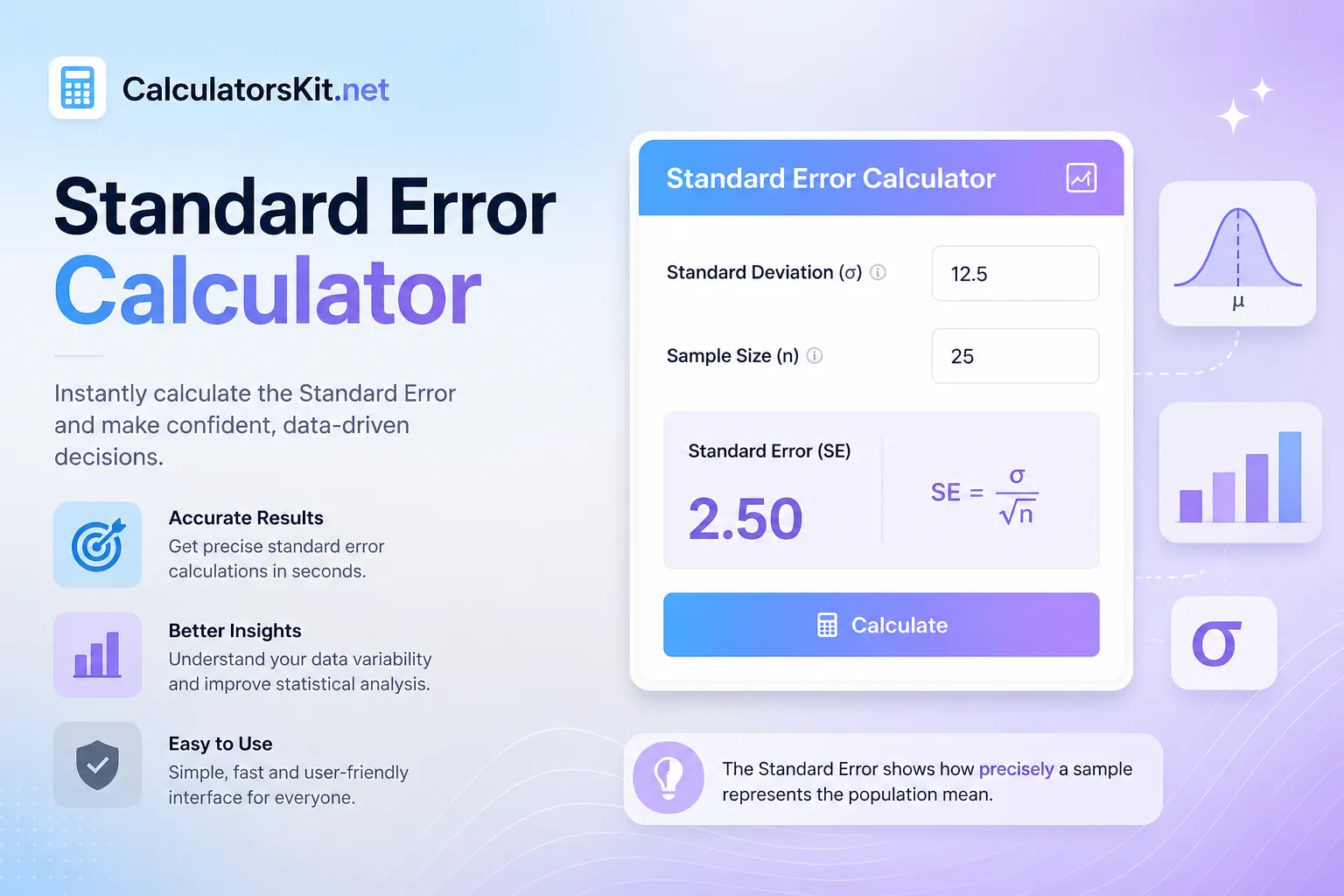
Use our free Standard Error Calculator to find SE instantly. Learn the formula, step-by-step method and when to use standard error vs standard deviation.
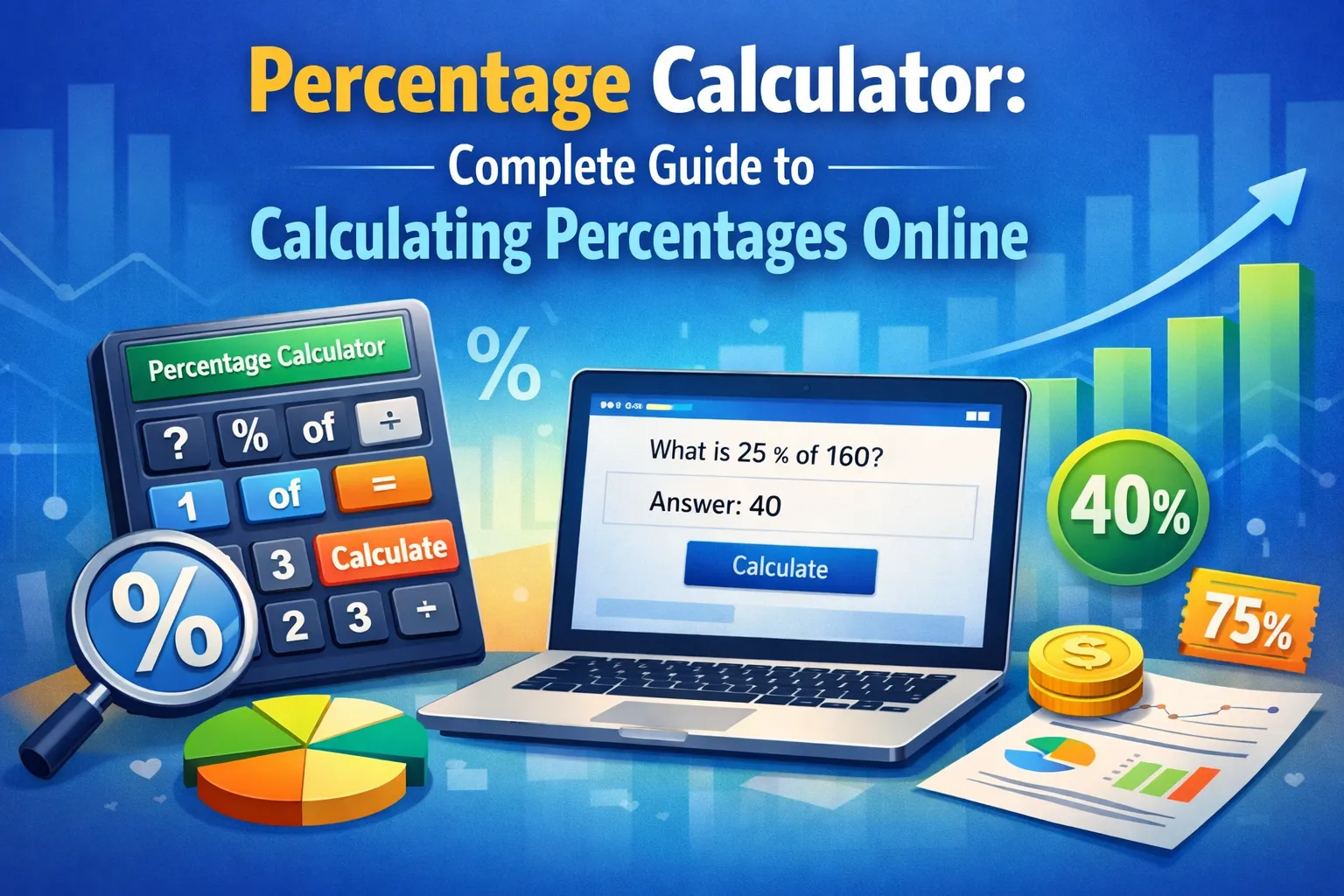
Master percentage calculations with our comprehensive guide. Learn formulas, real-world applications, and use our free online percentage calculator for instant results.
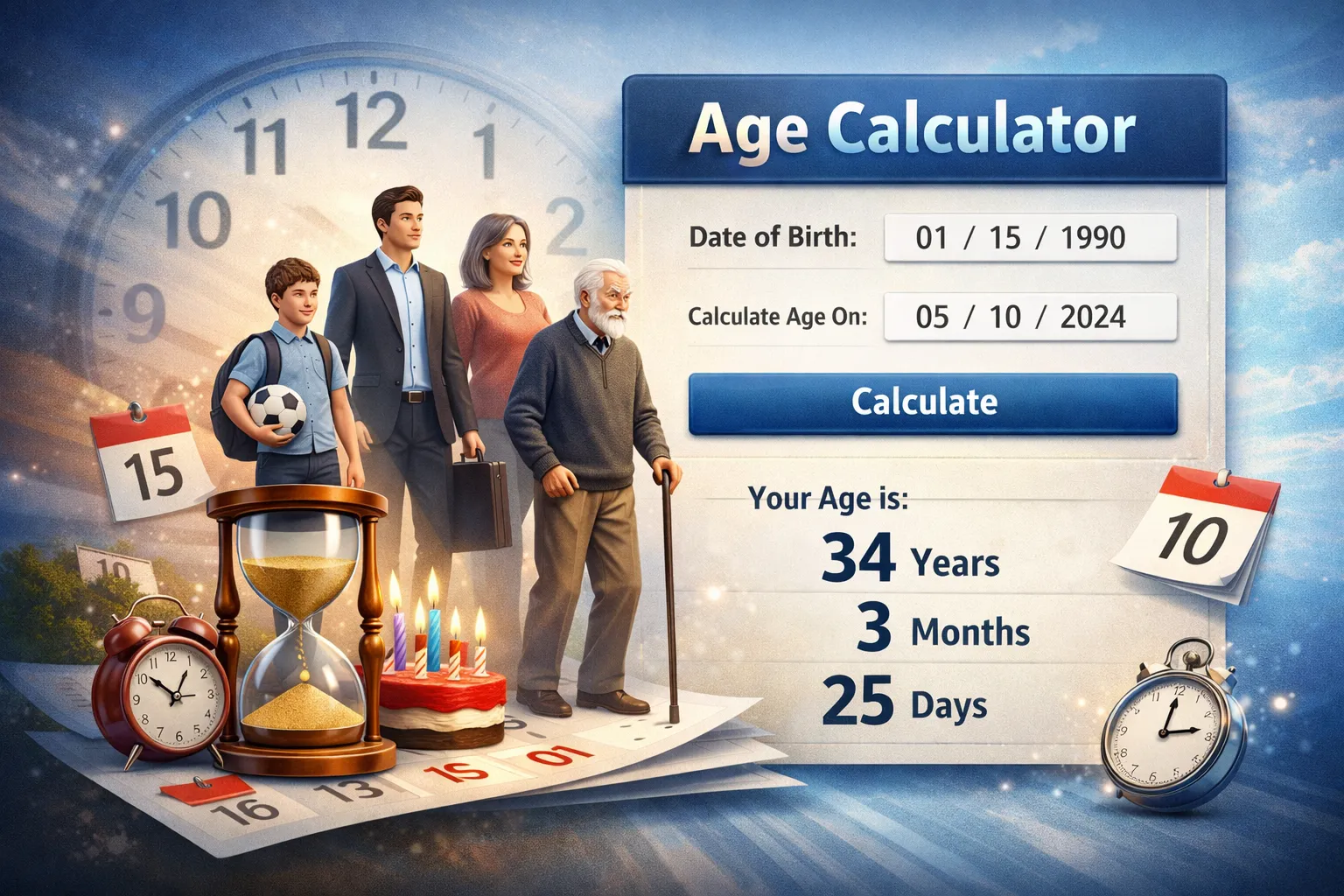
Use an age calculator and Birthday calculator to get exact ages for forms, school cutoffs, plans, and leap-year dates, with fewer entry mistakes.